
Plan bathroom plumbing in Portsmouth, VA, around fixture locations, supply lines, drainage, valves, access, repairs, and future remodeling needs.

A bathroom may look finished, while hidden plumbing determines how well every fixture performs. Water delivery, drainage, shutoff access, valve placement, and pipe routing all affect daily use. Newman’s Contracting LLC evaluates the bathroom as one connected system instead of treating each sink, toilet, tub, or shower as a separate concern.
As an experienced Portsmouth bathroom remodeler, the company coordinates bathroom plumbing services with fixture placement, wall access, flooring, cabinetry, bathing areas, and the approved project scope. Bathroom plumbing repair may involve leak diagnosis, water line rerouting, drain connections, shutoff valves, or bathroom pipe replacement when existing components no longer support reliable use or planned improvements.
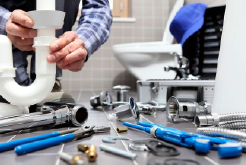

Well-planned bathroom plumbing can improve water delivery, drainage, repair access, fixture reliability, and remodeling flexibility. The strongest results come from coordinating supply and waste connections before cabinets, walls, tile, tubs, showers, or vanities limit access to the underlying system.
A homeowner may contact a bathroom plumber for one leaking connection, yet the wider system can still influence the repair. When a concern extends beyond one room, whole-home plumbing services may be more appropriate than a bathroom-specific project alone.
Bathroom leak repair should begin before moisture reaches cabinets, flooring, wall materials, or concealed framing. Homeowners should check visible supply connections, fixture shutoff valves, drain assemblies, and areas beneath vanities for staining, corrosion, or dampness. Changes in pressure, recurring odors, slow drainage, and loose fixtures may also signal plumbing concerns. Prompt evaluation can help distinguish a worn connection from a larger pipe or drainage issue.


Repeated slow flow or fixture backups may require drain cleaning and repair in addition to leak work. Clearing the opening alone may not resolve damaged sink drain plumbing, restricted waste lines, or deteriorated fittings.
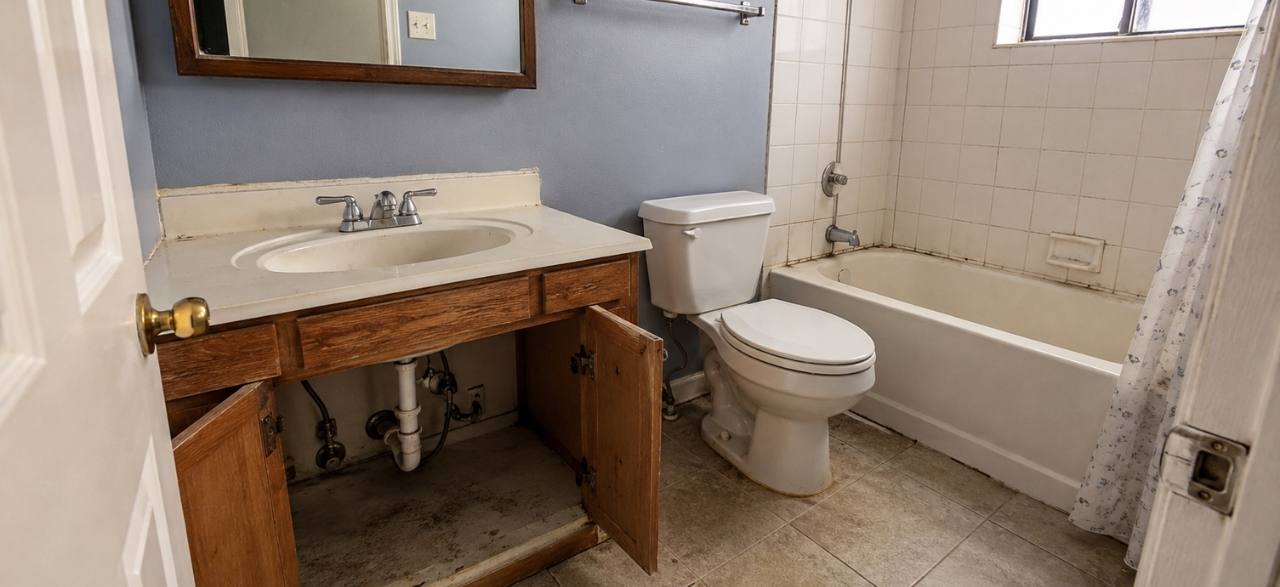
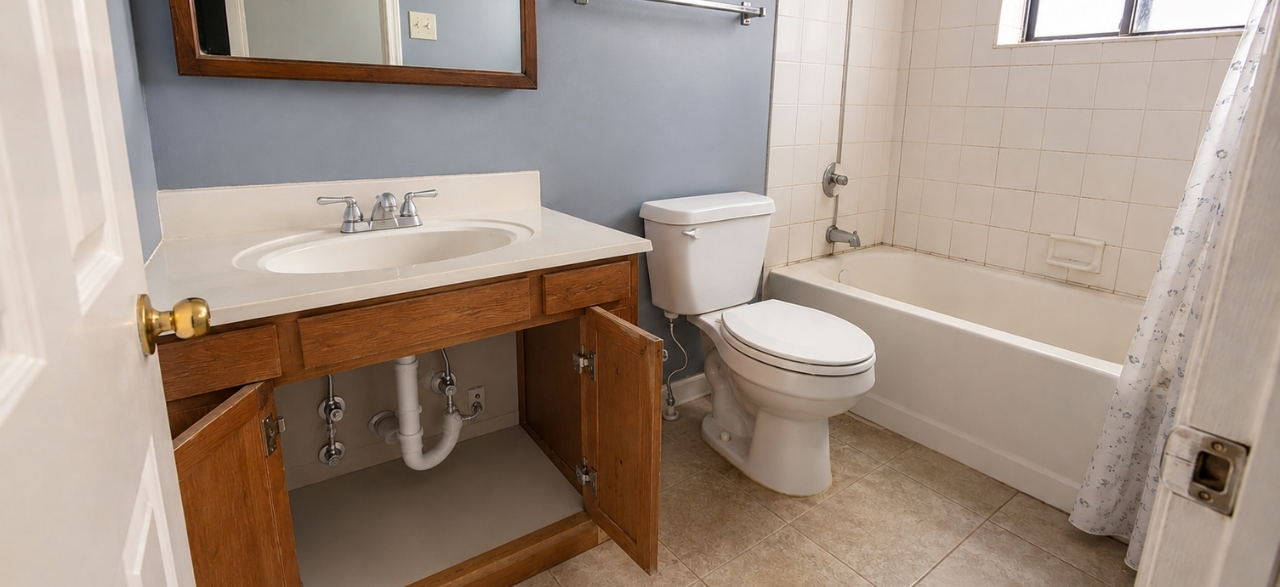
Bathroom plumbing in Portsmouth, VA, should be planned around where fixtures actually sit and how users reach them. Toilet supply connections, vanity plumbing hookups, shower valves, bathtub waste assemblies, and drains all depend on accurate positioning.
During plumbing for bathroom remodeling, moving a vanity, shower, tub, or toilet may require water line rerouting, drainage changes, or bathroom rough-in plumbing. These decisions should be made before finished surfaces narrow the available options.
Every bathroom fixture places different demands on the plumbing system. A toilet, vanity, bathtub, and shower each require specific supply, drainage, valve, and access considerations that should be coordinated with the room layout.
A shower mixing valve and related shower installation plumbing should be positioned before walls are completed. The same principle applies to bathtub plumbing, vanity plumbing hookups, and fixture shutoff valves that may otherwise become difficult to reach.
The correct scope depends on whether the bathroom has a leak, fixture problem, drainage concern, outdated pipe, or planned layout change. Each option serves a different purpose and may involve different levels of access.
Toilet supply connections, sink drain plumbing, fixture shutoff valves, and bathtub waste assemblies may require replacement when existing components are damaged, corroded, incompatible, or poorly positioned for new fixtures.
Newman’s Contracting LLC has served Portsmouth and the surrounding Hampton Roads area since 1986, bringing a remodeling-first perspective to bathroom plumbing. The team considers not only the immediate pipe or fixture concern, but also the walls, flooring, cabinets, shower systems, tubs, and finishes that surround it. That broader view helps plumbing decisions support both the current repair and the room’s future use. Homeowners can also arrange bathroom plumbing in Carrollton and other listed communities.
The team considers fixtures, pipe access, wall surfaces, flooring, cabinets, bathing areas, and layout before defining the plumbing scope.
Plumbing work is coordinated with demolition, fixture installation, wall preparation, surface installation, and the sequence of the wider bathroom project.
Supply lines, drains, valves, traps, waste assemblies, and shutoffs are reviewed according to their role within the selected bathroom work.
Repair and installation choices account for where plumbing can be reached without creating unnecessary disruption to nearby finished materials.
Focused bathroom plumbing repair may be possible when the affected pipe, valve, drain, or fixture connection is accessible and surrounding materials remain serviceable. Hidden damage, poor access, or incompatible fixtures can expand the scope. The bathroom should be evaluated before assuming the repair will remain isolated.
Water line rerouting may be needed when the new vanity changes sink position, cabinet depth, wall location, or fixture spacing. Drain alignment and shutoff access must also be considered. Even a modest layout change can affect supply and waste connections behind the wall.
A shower mixing valve regulates hot and cold water before it reaches the showerhead or other outlets. Its location, depth, compatibility, and access should be planned before the wall is finished. Replacement may be needed when the valve is worn, outdated, or unsuitable for new fixtures.
Reuse depends on the assembly’s condition, alignment, size, access, and compatibility with the replacement tub. Corrosion, leaks, damaged fittings, or different overflow locations may require new connections. The waste assembly should be evaluated before the new bathtub is permanently installed.
Bathroom rough-in plumbing establishes the concealed supply, drain, vent, and fixture connection points before finished walls and surfaces are completed. The exact work depends on the floor plan, fixture specifications, pipe routes, structural access, and approved project scope.
Fixture shutoff valves allow water to be isolated near a sink, toilet, or other fixture without necessarily affecting the entire home. Worn, corroded, leaking, or inaccessible valves can complicate maintenance. Their condition should be checked when nearby fixtures or connections are being replaced.
Discuss leaks, fixtures, pipe routes, drains, valves, or remodeling plans before bathroom plumbing work begins.